Team Climbing

Team Climbing
Ascent

Thursday, June 14, 2012

Outsmart the Cert Exam

If you consider yourself a poor test taker - welcome to the Club, as many IT Professionals can run circles around a network but perform poorly on standard multiple choice tests. There is nothing more frustrating than realizing that you know your tech but can't apply that knowledge  properly when taking a technical certification exam. This could be because tests give you the heebie - jeebies and you are in constant panic mode during the exam, or it could be that you haven't yet acquired the test taking skills necessary to properly analyze a test question to arrive at the correct answer. I have helped thousands of technical professionals prepare for certification exams and these are the nuggets of test taking knowledge that I have gleaned throughout the years. I hope that they can be of benefit to you when preparing for a cert exam.

Test Prep 101 - Five things you should do before a test:
1. Be technically prepared. You should download the exam objectives list from the exam provider and ensure you adequately learn the relevant subject material. NO EXCUSES!
2. Get adequate rest. You have to be at your best both physically and mentally.
3. Do some deep breathing to relax your body. There are many online sites that will teach you basic meditation techniques. They are easy and cost nothing, and you need the mental focus, so just do it.
4. Figure out what time of day works best for you when scheduling the exam. Some folks are at their best in the mornings while others need time to get their engines started and do better in the afternoon or evening. Figure it out and schedule your exam to match your most productive time of the day.
5. Review the following analytical approaches to answering test questions. Instill these items in the back of your mind and practice the techniques BEFORE you take the real test.
A test question is staring you in the face...what do you do? 
First things first - always read the question carefully and think of an answer before you read the choices. You either are going to understand the question or not. If you understand right away, then use Approach A, and if you don't have a clue what is being asked of you, then use Approach B. Keep in mind these approaches are for multiple choice type questions.
Analytical Approach A:

o   If you understand the question clearly, then scan the choices for the one that most closely resembles the answer you have pre-formulated. If you don’t understand the question, go to Analytical Approach B.

o   If your answer is not one of the choices, then read all the choices carefully and start to eliminate choices. This process of elimination allows you to arrive at the correct answer by eliminating from contention those which cannot be correct. Use the dry erase board provided to write down the question number and cross out the choices that are obviously wrong.

Example: Q1. A, B, C, D

·         When you narrow your choices to two, try each choice against the question to see which makes the most sense.

·         Don’t second-guess yourself. If you make an educated guess the first time around, don’t go back and start changing your answers haphazardly.

·         The only time you should ever change an answer from your original is because you are ABSOLUTELY sure you answered it incorrectly the first time.
Analytical Approach B:

If you are having difficulty even understanding the question, dissect it first using the following methodology:

Break down the question into its core components. A multiple choice question is typically composed of three parts:

Part 1: Body

§  Choose the simplest interpretation. Do not overthink the question and make it more complex than necessary. Do not think “real world”.

§  Be careful with Acronyms. You may already know the feature by a different name.

§  Unfamiliar phrases may describe a familiar concept or feature but using nontraditional words.  Example: AD Domain Services Installation Wizard instead of DCPROMO.

§  Some questions have incomplete information so be careful not to make assumptions unless absolutely necessary due to lack of detail or ambiguity.

§  Be careful with distracters. A distracter is something which compellingly and confusingly attracts in the wrong direction. Don’t be seduced into focusing on distractive or extraneous information.

Part 2: Emphasis

There is typically a key phrase or requirement that the answer choice hinges on. You need to discover the emphasis of the question in order to select the correct answer choices.

 Example Question: “You live in a rural area. One day around noon, you develop chest pain and suspect you are having a heart attack. It typically takes an ambulance 45 minutes to arrive at your home. You need to leave your home and begin travelling to the hospital as soon as possible. What should you do?”

A.      Get on your bicycle and ride to the hospital.

B.      Call an ambulance and wait

C.      Wait for the UPS driver who makes deliveries at 12:30 to arrive and take you to the hospital

D.      Hook up some jumper cables to your car battery and self-defibrillate

In this question, the emphasis is on “You need to leave your home and begin travelling to the hospital as soon as possible” and therefore the correct answer to the question is answer choice A. Nowhere in the question did it mention that there was a requirement that you arrive alive at the hospital.

Part 3: Answer Choices

·         Be careful with a partial choice. This is a choice that is missing information but may still be the correct choice once all other choices are eliminated.

Example Question: “Which of the following will guarantee you financial freedom?”

A.      Investing in the Facebook IPO

B.      Robbing a local bank

C.      Cashing in your winning jackpot lottery ticket

D.      Panning for gold in the Colorado outback

The best answer here would be C, because you have in hand a winning lottery ticket even though nowhere in the question did it say you purchased a ticket. Don’t argue with the question – just go with it.

·         Many of the choices are given a look of superficial plausibility so you must read carefully. A well designed test question will have distracter information in the body that if you are seduced into focusing on, will have corresponding answer choices to complete the seduction.

Example Question: “The American presidential election is held every four years. Democrats and Republicans typically increase their political attacks against each other in an election year. In 2008, Barack Obama was elected as President, defeating John McCain. It is rumored that in 2012, Obama will declare war on Canada and annex Mexico in an attempt to combat the growing federal deficit. Which primary issue will voters probably focus on during the 2012 election?”

A.      The state of the economy

B.      The war against terror in Canada and Mexico

C.      The abuses of presidential power

D.      The difficult logistical challenges of adding two more stars to the American flag

E.       How the United States is going to fight three wars at the same time

F.       The morality of dirty politics

 First you should pick up on the fact that the question is asking about the opinion of all possible voters not just the ones that read rumors off the Internet. So if you ignore the rumor of Obama megalomania, then you can also ignore answers B, C, D, and E. By using basic analysis, you have just eliminated most of the answer choices. Now that you have narrowed it down to A or F, you can make an educated guess that Answer A is a better choice as dirty politics have always been around and have never aroused the passions of the average American as the size of their paycheck does.
 Who will be tripped up on Multiple Choice Questions?

·         Panickers who inhibit their memory from operating by failing to read carefully, getting overwhelmed with the breadth of knowledge and also those who have a hard time visualizing.

·         People operating by real world instinct instead of relying on test analysis skills as their instinct will cause them to overlook stated facts and let emotion override reasoning.

·         People who are technically unprepared because of lack of knowledge or experience or both.
Other Test Taking Tips:

·         Guess intelligently when analyzing a question doesn’t seem to help: 

o   Don't guess until you've eliminated all the definitely wrong responses.

o   Factors that should influence your guess:  Look at the facts and ask yourself, so what? The issue that jumps out is likely to be the issue that the correct response addresses.

o   Beware of distracters.

o   Beware of certainties: always, never, cannot, must.

o   If two answers are opposites - one is probably true. Look for answer pairing if the question asks for you to choose multiple answers.

Example Question: Which of the following statements are true? Choose 2.

A: Lawn grass grows .5 inches a day.

B: Lawn grass grows 1.5 inches a day.

C: Lawn ornaments are typically seen in Florida.

D: Lawn ornaments are typically seen in Saudi Arabia.

Even if you didn’t know the growth rate of grass, you can see that you need to make a choice between A and B answer choices which are paired, and between C and D which are also paired answer choices.

o   Don't get bogged down by things you don't know.

o   Don’t choose an answer because it looks exotic and new.

o   Be prepared physically, be well rested, and eat well.

·         Pay attention to timing. Figure how much time you have per question and keep an eye on the clock to give yourself time to re-visit the questions you left blank or incomplete.  Remember that some exams may have multiple separately timed sections.

·         Maintain your focus and concentration. If you need to get up and stretch, splash cold water, drink more caffeine, do so.

·         If all else fails, choose B or C! A few studies show that those answers are correct at a slightly higher rate than A or D.

·         For lengthy scenario based testlets, read the questions first before reading the scenario. That way when you do read the scenario, you will already have an idea of what areas to pay more attention to as you search for clues that will help you answer the questions.

A final word of advice - keep your cool. If you get to the test center after reading this blog post numerous times and you still find yourself frozen when staring at a test question, it means you are in panic mode and you need to refocus and take control. Have you ever witnessed a martial arts student get into a brawl and forget all their defensive blocks and techniques and instead descend into a blur of flailing arms and legs? That is the equivalent of what you are going through when you can't maintain focus and follow the analytical approaches outlined here. It takes much practice and mental control, but the more you practice, the easier it gets - like anything else in life.

I wish you much luck on your certification exams.
Note: Portions of this document are derived from Michael Josepheson, Evaluation and Grading in Law School, AALS Section on Teaching (1984).

Thursday, March 22, 2012

Be a Cloud Buster - Get Microsoft Private Cloud Certified

Being an IT Professional is not for the faint of heart or for the nine to fivers who can’t wait for the work day to end so they can get home on time to catch their favorite TV show. It requires extreme dedication, frequent knowledge building, long hours away from family and friends and a knack at reinventing oneself.  The only constant in this industry is change.

So how do you make yourself relevant in this seeming chaos where technology seems to be traveling away from you at the speed of light while your brain cells try to kick-start warp speed in hot pursuit? In one word – certification.

For many, certification seems to be just a resume sorter that differentiates you from the noncertified and although this is a true statement, perhaps a change in perspective will help you to see past the resume stacking. While you are pursuing certification, you are also actively reinventing yourself as an IT Professional. The long hours studying, working through learning labs and memorizing new facts may seem like just an endurance test, but in reality you are getting in shape for the greatest of all IT sports competitions – relevancy.    

You would think that the amount of knowledge you have gleaned so far in your career would ensure you job security. Think again. Your current skills have a limited shelf life and unless you are willing and motivated to keep up with the constant changes, then perhaps switching to a less demanding career is in order. I know it is irritating and frustrating and stressful to learn a new skillset but it is also very necessary if you plan on continuing down your chosen career path. On the flip side, if you truly love technology, then keeping current should not be as painful.

Nothing strikes more fear in the mind of an IT Professional than picking up every trade rag and reading a new buzz phrase that is all the rage but they have absolutely little to no expertise in. For many that phrase today is “Cloud Computing”.  Worse, there seems to be more types of clouds than can fit in a national weather report. Private cloud, public cloud, hybrid cloud….

Put your fear aside, and get to work – on getting certified that is. If you are, as I am, an IT Professional who specializes in Microsoft products, you are in luck, because Microsoft’s next line of certifications is all about that dreaded word “Cloud”. In other words, you can fly in the clouds by pursuing the latest Microsoft certification. Don’t argue or try to reason with it, just do it.

If you look past at the last 20 years that Microsoft has been in the certification business, their focus has been on keeping you, their greatest technology champion, equipped with the right credentials to not only be competent at what you do but happily employed. That is really what the certification process boils down to – currently skilled IT Professionals in Microsoft technologies plus gainful employment equals Microsoft Market Share.

Microsoft’s Private Cloud certification focuses on just that – those Microsoft technologies that allow your organization to pool resources across the datacenter and the enterprise while providing a flexible usage-based self-service model for your consumers and at the same time simplifying deployment, maintenance, and cost, while increasing agility and power.

And this paradigm shift in computing means a paradigm shift in the skills IT professionals will need to configure, deploy, monitor, and operate private cloud solutions of today—and tomorrow. The increased capacity and capability of Private Cloud solutions means that IT Professionals and Developers will need to have a new and broader set of skills.

The cool thing about the Microsoft Private Cloud certification is that it builds on skills that you should already have, those skills required of a Microsoft Certified IT Professional (MCITP) Server Administrator. If you have already achieved your MCITP Server Administrator certification, than you are already halfway to becoming Microsoft Private Cloud certified, just two more certification exams required. These two exams are currently in beta and will hopefully be released soon to the IT community.

If you want to stay relevant and add some shelf life to your IT career, get started today by reviewing the Microsoft Private Cloud Certification Overview page at http://www.microsoft.com/learning/en/us/certification/cert-private-cloud.aspx . You can prepare and practice for the new certification by signing up for Microsoft’s Private Cloud Jump Start course. Set up a test lab environment while you are at it to simulate your own private cloud, and deal with your fear of the cloud by immersing yourself in it. Soon you will be flying high and effortlessly through the cloud while your IT career finds itself back on solid ground.

Postscript: Microsoft has released some cool "comics" on the Cloud and Powershell and you can download them here: http://borntolearn.mslearn.net/comics/default.aspx

Monday, August 8, 2011

Certified What?

Well folks. I actually did it, I finally achieved the Microsoft Master's designation after passing the Cert Lab. Ryan Conrad, MCM Program Manager sent me the good word today.

Now what do I do with this new found acronym? Ask my boss for a raise? Well I am self employed, so that won't work. Shoot for the Microsoft Certified Architect certification? Uh, that would be a big NO at this point.

Honestly, I feel like running ten miles just to stop the adrenaline flow through my body. What a rush! And after that I feel like sitting in front of the TV for a day with just the clicker in hand. Once I am acclimated back to my normal environment, maybe it will sink in then.

To all of the guys from my rotation who are still working on achieving the MCM, please don't give up! Keep at it! You can do it, I know you can!

I will never do that again...


Have you ever woken up after a long night of drinking, mouthing those words to the porcelain God?

Well I am typically the kind of guy that does a bad thing one time, like sticking a butter knife in a wall socket - been there, done that - once!

Yesterday, I did a bad thing twice - I retook the MCM Active Directory Lab again, although this time from the comfort of my home. The second time was a little less intimidating, but not painless. I had nightmare flash backs of that first dreadful day in Redmond. The nine hours dragged on while the familiar sound of audible cursing filled the room when my screen didn't refresh fast enough and when a normally simple configuration task turned into a programmed and devious diversion of "not so fast, you just thought that was going to be easy." I have to hand it to the MCM lab designers, if this were the Middle Ages and the Inquisition was recruiting, these guys would have job security.

Well, that was yesterday, and today I am feeling better...waiting for my results. Looking back at it, maybe it wasn't as bad as I am imagining. On second thought, it was, but I am not one to leave business unfinished and I paid out of pocket for the electric shock therapy, so NOT retaking the lab was not an option. I am as my wife says, the most stubborn person on the face of the earth - persistent is probably a more euphemistic word.

Crossing my fingers! Will let you know as soon as I get the word.

Wednesday, June 8, 2011

Nursing a Sick DC Back to Health

In Part 1 on DC health, I described the symptoms of a DC that has fallen ill, preventing it from replicating with its partner DCs.
So how do you nurse a sick DC back to health? Triage your actions depending on the symptoms.
Symptom: Schema Version Mismatch
As I stated in the previous article, this may not necessarily be a symptom of illness but the normal process of DCs making sure that they have the latest copy of the AD building code (schema) before replicating from a partner DC. In other words this is a normal behavior that occurs when the schema is updated and it takes time to replicate the schema changes throughout the AD Forest.  The only action required is to wait for a normal replication cycle to take place or if you are not the patient sort, force AD replication to occur.

To find out the Schema version of the Forest, use either ADSIEDIT.MSC or DSQUERY from the Schema Master DC.
1. Using "ADSIEdit.msc " or/and "LDP.exe" tools:
 Navigate to: "CN=Schema,CN=Configuration,DC=domain,DC=local" and review the current "objectVersion" attribute.

 2. Using "DSQuery" command line:

The following is a list of the schema versions broken down by operating system release but all DCs in the same forest, regardless of OS, should be at the same schema level.
13 -> Windows 2000 Server
30 -> Windows Server 2003 RTM, Windows 2003 SP1, Windows 2003 SP2
31 -> Windows Server 2003 R2
44 -> Windows Server 2008 RTM
47 -> Windows Server 2008 R2
Symptom: Lingering Objects
You have basically two options when a DC comes down with a case of lingering objects: either remove the lingering objects or allow the lingering objects to “re-replicate” to the other domain controllers. Which action you take depends on a registry value “Strict Replication Consistency” that is set on each DC.
Think of “Strict Replication Consistency” as a country club restaurant where you would like to take your family for brunch on Sunday. When you call the club restaurant to make a reservation, the Maître D will ask for your name. If the club has strict rules for who is allowed to brunch there and you are not already on the club membership list, you will be re-directed to the nearest Waffle House. If the club has loose rules, and allows anyone to eat at the club restaurant, then your name will be added to the reservation list and you will be welcomed. Similarly a DC either takes a strict or loose stance against allowing lingering objects (non-club members) to replicate to it.
Windows 2000 DCs up until SP4 were always loose and crazy guys, never taking a snob approach when detecting a lingering object. They had a big heart and let anyone in the doors.
Windows 2003 DCs and later are the snobs of the family where strict replication consistency is enabled by default and  if a lingering object is detected, they will refuse to replicate it.
Now, being a snob can be beneficial at times. In the case of lingering objects you are preventing objects that have been purposely deleted from coming back. Wouldn’t you feel a little irked if you kicked a member out of your country club because they couldn’t play nice but then you have to sit next to the guy at Sunday brunch because of loose club restaurant rules?
Imagine now that your predecessor was a bad boy admin and was fired and escorted from the building and their AD user object deleted. You probably don’t want to reintroduce the bad admin user account back into AD where they could logon and wreak havoc. Strict replication rules do have their place under the sun.
Enforcing strict replication consistency is the default and the only time you would want to disable it is to purposely reintroduce lingering objects back in the directory like reinstating a club member you previously booted out. In most circumstances, lingering objects should be removed as they were intentionally deleted for a reason.
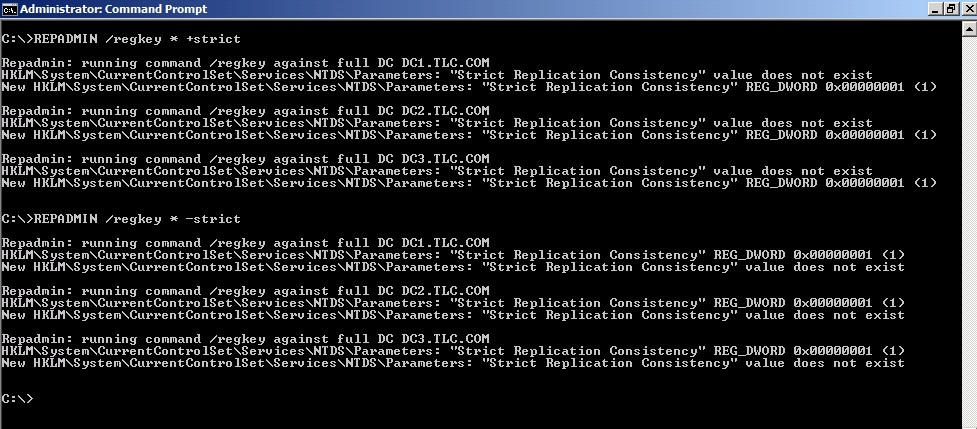
If you go against your better judgment and want to turn of Strict Replication Consistency, you can do so with REPADMIN.EXE.
As you can see in the following graphic, you can enable or disable strict consistency on all DCs at the same time.

Before you decide on your next action step, you should first determine why lingering objects are present to begin with. The two primary reasons lingering objects show up are because a DC was restored using an unsupported method (i.e. a virtual machine snapshot causing USN rollback) or the DC failed to replicate for longer than Tombstone Lifetime (TSL). The latter is not so bad, as the DC like Rip Van Winkle is stuck in a time warp that is going to require some “reeducating” while the former is a much more serious problem that involves “zapping” the DC with a “Men in Black” neuralizer.
If it is a TSL issue and you need to erase from the Van Winkle DC, knowledge of objects long since deceased, you can remove the lingering objects with either REPADMIN.EXE or REPLDIAG.EXE.        
REPLDIAG.EXE is the preferred tool as it can clean all Naming Contexts (NCs) from all DCs with one command REPLDIAG /RemoveLingeringObjects. You can download REPLDIAG.EXE from Codeplex at http://activedirectoryutils.codeplex.com/releases/view/18287

If using Repadmin.exe:
1.       First find the GUID of the DC with the known good replica with REPADMIN /SHOWREPL DCname.
a.       So if DC1 has the good replica:


2.       Then run Repadmin /removelingeringobjects  DcNameThatMayHaveLingeringObjects GUIDofDCthatHasAKnownGoodReplica  DomainNamingContext


3.       Check the Directory Service log of the DC that may have the lingering objects for events 1937 and 1939 to see what was removed.


4.       Repeat for each NC (Schema, Configuration, Domain, etc.)

After removing the lingering objects, you will need to restart replication by setting the following registry value:
HKEY_LOCAL_MACHINE\SYSTEM\CurrentControlSet\Services\NTDS\Parameters\
Create or modify if exists: Allow Replication With Divergent and Corrupt Partner
DWORD: 1
Once replication has successfully occurred, then set the same value to 0.
If the lingering objects are present because of USN rollback, you should take the far more drastic approach of demoting the DC that was improperly restored and promoting it back into the domain from scratch.  Just point your neuralizer at it and administer the MIB eye exam ala DCPROMO.
Keep in mind however, that you will have to forcibly remove the DC as a normal demotion will fail (see graphic below) since the other DCs refuse to replicate from it. DCPROMO /FORCEREMOVAL will do the job.


Post Op Evaluation
I hope you have learned some DC first aid techniques that will nurse your DCs to their rosy- cheek healthy selves and back in full replication shape. While you are at it, proactively monitor your DCs more closely so that the ailments don’t come back.

Monday, May 16, 2011

Don’t give me your Cooties – When a Domain Controller Refuses to Replicate

If you were to walk onto an airplane during the height of flu season wearing a surgical mask and vehemently hacking and coughing, the guy sitting next to you is likely to scan around for an empty seat to move to, as far away from you as possible. Face it: no one wants your cooties.
A Domain Controller (DC) has a similar aversion to getting sick and when a replication partner is showing signs of illness, the healthy DC doesn’t hesitate to quarantine the sick DC by refusing to replicate from it.
So Doctor, what symptoms does the healthy DC check for before it declares its replication partner, persona non grata?
Symptom Number One – Schema Version Mismatch
The AD Schema is similar to a building code. If I want to build a home in Fort Collins, Larimer County, Colorado where I live, I can’t just march down to Home Depot, load up the truck with supplies, and start framing a home. There are rules to adhere to. So I start off by finding out what the county building code is and then pay for a building permit which legally requires me to adhere to the code. The local code dictates the rules for building the structure - ceilings have to be so high, electrical outlets placed so many feet apart, the roof pitched so many degrees to support the area’s snow load, etc.
Similarly, the AD Schema is the building code for an AD Forest in that all of the Forest’s domains have to abide by the same set of rules for object creation. Each DC in the forest stores a local copy of the AD Schema in its Active Directory database file, loads it into memory and then consults the Schema when new objects are added to the Forest. The Schema basically dictates the types of objects that can be created and what attributes are allowed for those objects, the same way a city’s building code dictates the types of dwellings that can be built and their allowed characteristics.
What would happen if you built your home using an old version of the building code that had an outdated electrical compliance section? Simple - when the home inspector checks your home’s compliance with code, you would be told to pull out all the wiring and start over again; otherwise you are not getting a certificate of occupancy.
In AD, a DC will not replicate data from a partner DC if the partner is using a different version of the building code (schema).  Before replication occurs, the partner DCs will exchange schema version level information. If the DCs don’t have the same schema version, replication of AD Forest Objects between those partners will be held up until the schema itself is fully replicated and both DCs are at the same Schema version.
In reality, this is not a symptom of illness itself as it just means the destination DC will wait to raise its schema level on par with its partner DC, but it does result in a replication delay.
Symptom Number Two – Detection of Lingering Objects
Now this just sounds nasty. Before you consult the medical dictionary, let me first tell you what a lingering object is.
When you create an AD object like a user object, the object will be assigned attributes or properties, such as common name, password, group memberships, etc.  The object then replicates to other DCs in the same domain. AD Replication happens at the attribute level, meaning that when an attribute changes, only that attribute and not the entire object will be replicated.
A little more background is required before you can understand how a DC comes down with a case of lingering objects.
When you delete an object in AD, it becomes a tombstone object and remains in the AD database for a period of time before it is permanently removed. This “obituary” period is known as the tombstone lifetime (TSL) and is how other DCs learn through replication of an object’s demise. The default TSL for Windows 2008 is 180 days although an Enterprise Admin can set it to whatever they want.
Now let’s say that you purposely delete employee Joe’s user object because he just won the lottery and he told you what he really thought of his job before resigning from the company. According to the TSL, 180 days later, object user Joe should be permanently removed from AD.
But what happens if there is a forgotten DC from the domain that has been neglected and has not replicated for 190 days, longer than TSL? That DC never received Joe’s tombstone obituary notice through replication and therefore did not delete its local copy of the user object Joe, maintaining like some Elvis fanatics that user object Joe is still “alive”. A DC not replicating for 190 days sounds like an unlikely scenario, but trust me, it happens.
To continue my scenario, let’s say you send a junior admin who was foolish not to participate in the office lottery pool to the branch office to put things in order. Said Junior Admin fixes the replication problem but also decides out of boredom to run a script that sets the “favorite drink” attribute on all domain user objects to Jolt Cola.
When live-user object Joe’s favorite drink attribute is changed and the branch DC notifies its partner DCs of the change, the other DCs will detect during the replication attempt that the branch DC has a lingering object and will halt inbound replication.
How do they detect this? Because the other DCs will notice that they are trying to replicate “Joe’s favorite drink” attribute for an object they have no knowledge of since they permanently deleted Joe a long time ago. The other DCs are essentially saying: “You are trying to tell me Joe’s favorite drink? – I don’t even know who Joe is!”
Meanwhile flesh and blood Joe is putting his lottery money to work on a beach in Jamaica where his new favorite drink is now a Pina Colada.
Symptom Number Three – Last replication is greater than Tombstone Lifetime
Fortunately, a DC doesn’t have to try and replicate changes to a lingering object to notice something is wrong. A Windows 2008 DC will simply keep track of when their partner DC last replicated and if it is greater than TSL, inbound replication from the loafer DC will be halted. Two error messages will be noticed in the DC’s Directory Service log: Error 1864 and Error 2042.
In the following example, I configured DC1 and DC2 as domain controllers in the same domain. I also manually set the TSL to 2 days and then shutdown DC2. Three days later, I brought DC2 back online, but by failing to replicate longer than TSL, partner DC1 refuses to replicate from it. The following two errors 1864 and 2042 were recorded in DC1’s Directory Service log as can be seen in the following graphics.


 Symptom Number Four – Detection of USN Rollback
Each DC maintains a copy of the AD database file NTDS.DIT and assigns the database a unique ID called the Invocation ID.
At the same time, when a DC creates an object or modifies an object’s attributes in the database, it assigns that LDAP write transaction, a unique locally generated number called an Update Sequence Number (USN).
Each DC maintains its own USN counter and the counter increment is not synchronized with other DCs. Think of the Invocation ID as a Journal and the USN counter as sequential changes to the database recorded in that journal. Each DC maintains its own system of Journals and USNs.
So let’s examine a simple AD database change on DC2 that then replicates to DC1 and see how each DC keeps track of the changes.
Let’s say DC2 starts off the day with a USN counter of 1000 as last recorded in Journal # 1 (its invocation ID). If DC2 then modified three different object attributes at different times of the day, each LDAP write transaction would be sequentially assigned DC2’s next available local USN of 1001, 1002, and 1003 respectively, all recorded in Journal # 1.
DC1 will then replicate those three attributes and record that the last change it received from DC2 was Journal 1/USN 1003.
USN rollback occurs when a DC’s database is improperly restored and “undoes” previous changes in the database, for example, if I restore DC2 from a virtual machine snapshot that was taken right before those three attributes were modified. After the improper restore, DC2 is back to believing its current USN counter is 1000 on Journal # 1, effectively forgetting that it had assigned USNs 1001-1003. It’s partner DC1 however still believes the last update it received from DC2 was Journal 1/USN 1003.
When DC1 detects that it has knowledge of a higher USN for DC2 (Journal 1/USN 1003) than DC2 has for itself (Journal 1/USN 1000), DC1 informs DC2 it is in USN rollback and DC2 halts all inbound and outbound replication and also pauses its NETLOGON service.
This will be recorded in the Directory Service Log on DC2 as errors 2095 and 2103 as seen in the following graphics.

Run, Forest, Run
So now you know why a healthy DC runs in the opposite direction from one that appears ill, but how do you fix one of these problems and nurse the ill DC back to health? Antibiotic therapy and defibrillation steps will be covered in part 2. Stay tuned.

Wednesday, May 4, 2011

DTR12 Update

The official results of the DTR12 AD Master's class have been published by Ryan Conrad, AD Masters Program Manager at http://blogs.technet.com/b/themasterblog/archive/2011/05/03/mcm-directory-rotation-12-results.aspx

A hearty congratulations goes out to my two fellow classmates Simon and Chris who excelled and achieved the coveted Microsoft Certified Master's designation. To put in perspective their ahievement, they passsed the two very difficult written exams and they survived the grueling nine hour certification lab during the two week class period - the only two students out of fourteen total attending to do this. With just a 15% initial certification rate, Simon and Chris can feel very proud of what they have accomplished.

Although I was happy to pass the two written exams the first time and have that behind me, I was bummed that I did not pass the certification lab and have to wait three months before I can attempt it again. I have already started preparing and have been busy practicing every day in my virtual environment and increasing my consulting engagements to be in the best technical shape possible before July roles around.

To my fellow classmates who are also still in pursuit of the Master's designation, I wish you much luck on exam and lab retakes. Don't give up! Let's meet Simon and Chris at the top of the mountain.

Tuesday, April 19, 2011

Microsoft Master's Class - A Mind Blowing Experience

This is your brain
This is your brain on Master's

Sunday, April 17, Day 14

Well, the class has finally come to an end. As promised, here's the recap of the last three days. I know you have been riveted to your chair in suspense, wondering about the outcome of the class, or maybe you have better things to do with your time.

On Friday we finished up the day with Group Policy in the morning followed by Disaster Recovery. Manny, one of my fellow classmates volunteered to teach the DR section and delivered an outstanding presentation. Way to go Manny! Then it was off to study on our own for written test # 2, that if you have been keeping up with the blog, you know I miraculously passed on Saturday morning.


Manny teaching DR
Right after we finished written test # 2 and before going to lunch, Ryan sat us down and gave us a twenty minute prep session on what to expect in our Cert lab. The two things that stuck out for me were "don't waste your time memorizing command line syntax" and "if you don't know it by now, you are not going to know it by tomorrow."

We spent Saturday afternoon preparing for Cert lab with these words echoing in our minds. Then all of a sudden, Friday's DR training paid off immediately as we ran into a real disaster. The Hyper-V hosts we were working on all died in the data center, due to a power outage and some Murphy's law reaction by the UPSes.

For us AD MCM candidates, it was an annoyance as we just sat around waiting for the servers to come back up so we could continue our practice session. For the Lync Masters down the hall who were in the middle of their real Cert lab, it was a complete disaster, as the outage happened twice. They were sent home after three weeks without being able to complete their labs. I felt bad for complaining about being stressed after seeing what they had to go through.

I returned to the hotel, making a mental checklist of how I was going to attack the "break and fix" scenarios we would see on the Cert lab: Check the Forest and Domain Functional levels, check schema versions, check replication, check DNS. and on and on and on. I went to bed early that night because as Ryan said (and I believe him most of the time) that if I didn't know it now....

The next morning, we nervously entered into the classroom, wondering if the Data Center staff had put their Disaster Recovery plan in operation and we would be spared the Lync Master's fate. They did and I breathed a sigh of relief, although my relief was short lived as you will understand a little later. Please read on and don't be tempted to stop no matter how appealing that episode of "Dancing with the Stars" is on TV right now. Tivo it.

Ryan handed each person a large white envelope with our name on it and explained that it contained our lab scenarios. We had exactly nine hours to finish.
At 9:15 AM, I opened up the envelope and read through the multi page list of items I needed to work on. After reading through what I was supposed to do, and making a mental calculation about what I could realistically accomplish, I began to triage the scenarios and prioritize my next moves. Unfortunately, my orderly and disciplined approach soon descended into chaos.
You know one of those movies where the world is coming to an end and everything goes wrong and finally the hero saves the day at the last split second? Well, it wasn’t one of those days.  My cert lab world was a friggin’ disaster as I worked as fast as I could through the scenarios yet things weren’t getting fixed fast enough. I took no breaks during the nine hours except to get up, grab a slice of pizza, and sit back down again. I swore often and hit the keys on the keyboard a little harder than I normally do.
In one scenario I tried to use a script to accomplish the requirement but no matter what I did, the script although word for word exactly what was needed, would not work. I remembered something that instructor Mark Cooper had said about Notepad doing some strange things to scripts. I contemplated doing COPY CON (old DOS users know what this means) but ruled it out as the time ticked down. My frustration level went through the roof.
When the lab clock stopped at 6:15 PM, I looked around the room and could tell by my classmates’ frustrated looks that I was not the only one who had trouble getting through the scenarios. We gathered in the hallway and everyone talked about how many lab items they never even got to do because they ran out of time.
Although the mood was somber, slowly it sank in that finally the class was over, and that normal life could resume. Ryan had told us earlier that it would take him some time to adequately grade the labs so we wouldn’t know our results until Tuesday night.  So for now we could just kick back and relax and at least relish the fact that we didn’t crack and call it quits, but stuck it out to the very end. From that point of view, we ALL “passed the test”.
From the classroom we went straight to Bellevue’s world famous Daniel’s Restaurant where Ryan had booked us a private room overlooking the city. Bill Gates’ favorite table was just outside the room, but tonight he wasn’t there. Now it was time to let loose and to shake off all of the stress that had been hanging on us for the last two weeks. Beer, wine and mixed drinks flowed freely and soon enough everyone was smiling, joking and laughing, not to mention eating the best steak I have ever had in my life. You could sense and feel the camaraderie in the room. DTR12 had gone to technical hell and back and we had made it through as a team.
Group pictures were taken. Heartfelt goodbyes were exchanged.  DTR12 then left the building.
So how do I sum up my experience at the Microsoft Master’s class? In one word: REWARDING! I am not talking about the certification, but to the unequaled learning and networking experience that this class offers. I feel that it has taken my technical proficiency to a whole new level and that I also made an awesome group of like minded friends in the process.
Sure, getting the certification is a goal, but as cliché as it may sound, it is always the journey and not the destination that defines our lives, personally or professionally.  Microsoft Master’s class was a positive, sickening, amazing, frustrating, gratifying, mind numbing experience that I heartily recommend to anyone who thinks they are on their technical game. Make the most of your experience if you have the privilege of attending a rotation, and please tell the rat pack of instructors Ryan, Matt, Steve, Mike, and Mark, that DTR12 sent you.

Our view from Daniels restaurant

Our private room at Daniels

De-stressing from the last two weeks

The wine is flowing and we all feel good

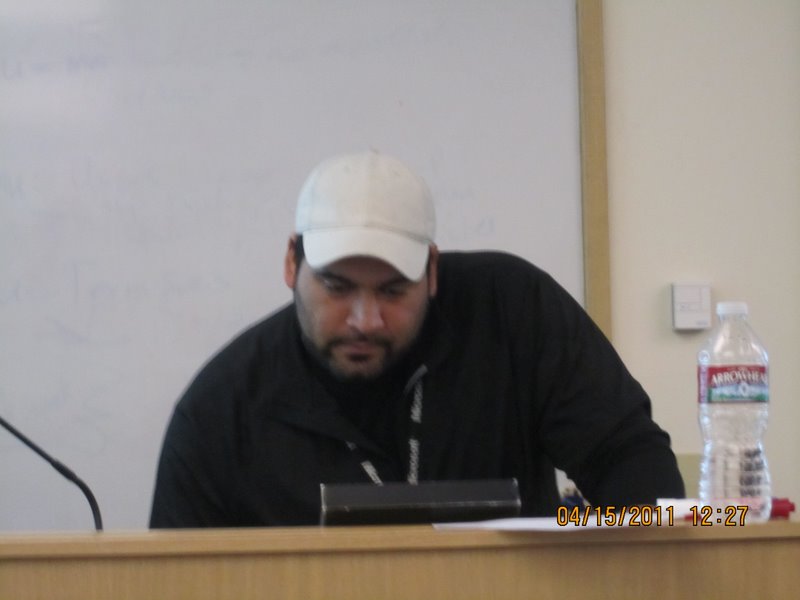
Manny and Ryan

Instructor Steve Patrick

DTR12 sans instructors

DTR12 with instructors Steve and Ryan


About Me

My photo
Herndon, Virginia, United States
IT Security Manager by day - cyber researcher by night. Tired of being a passive sheep as cyber wars rage. It is time to take the fight to the enemy - within the constraints of the law of course! I am a super fan of all things cyber security! You can find me on LinkedIn at: https://www.linkedin.com/in/james-carrion-2805767/

Microsoft Certification Stack

Microsoft Certification Stack
Microsoft Certifications